
Eye Laser Surgery in Turkey for German Patients: Complete Travel Guide
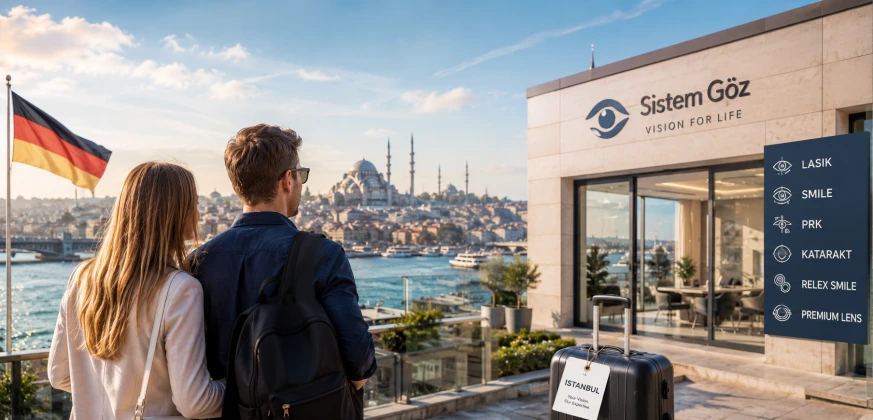
Eye Laser Surgery in Turkey for German Patients: Complete Travel Guide
Turkey, and particularly Istanbul, has become a frequently researched destination for international patients considering laser eye surgery. German patients often compare treatment methods, medical technology, travel duration, communication, postoperative follow-up and total costs before deciding whether to have surgery abroad.
Laser eye surgery should never be selected on price alone. The suitability of LASIK, PRK, SMILE or another refractive procedure depends on the patient’s prescription, corneal thickness, corneal shape, tear-film quality, age, lifestyle and general eye health.
This guide explains the main points German patients should consider before travelling to Turkey for laser eye surgery.
Why Do German Patients Consider Laser Eye Surgery in Turkey?
German patients may consider treatment in Turkey for several reasons:
- Access to different laser vision correction methods
- Short direct flights between Germany and Istanbul
- Clinics experienced in treating international patients
- Availability of German- or English-speaking coordinators
- Combined examination, treatment and follow-up programmes
- Potential cost differences compared with private treatment in Germany
- The opportunity to complete the process during a short trip
Search results aimed at German patients frequently compare prices between Germany and Turkey and discuss LASIK, Femto-LASIK, PRK and SMILE as separate treatment options. However, advertised prices can vary according to the technology used, the surgeon, diagnostic tests and what the treatment package includes.
Which Laser Eye Surgery Methods Are Available?
The most frequently considered laser procedures include LASIK, PRK and SMILE.
LASIK
LASIK involves creating a thin corneal flap and reshaping the underlying tissue with an excimer laser. It is commonly associated with rapid early visual recovery.
LASIK may be considered for suitable patients with myopia, hyperopia or astigmatism, provided that the corneal structure and other measurements are appropriate.
PRK
PRK is a surface laser procedure and does not involve creating a corneal flap. The outer corneal layer is removed before the laser reshapes the cornea.
PRK may be considered for selected patients with thinner corneas or lifestyles where a corneal flap may be less desirable. Its early recovery is generally slower than LASIK.
SMILE
SMILE is a small-incision, flap-free procedure mainly used for myopia and astigmatism. A small piece of corneal tissue is created with a femtosecond laser and removed through a short incision.
SMILE may appeal to patients seeking a flap-free procedure, but it is not suitable for every prescription or eye structure.
How Is the Right Procedure Selected?
The safest procedure cannot be chosen through an online consultation alone. A comprehensive eye examination is essential.
The assessment may include:
- Visual acuity testing
- Current and previous prescription measurements
- Corneal thickness measurement
- Corneal topography and tomography
- Pupil-size measurement
- Tear-film and dry-eye assessment
- Eye-pressure measurement
- Retinal examination
- Evaluation for keratoconus or corneal irregularity
- Review of medical history and medication use
German patients should be cautious if a clinic guarantees a specific procedure before completing the necessary measurements.
How Many Days Should German Patients Stay in Istanbul?
The recommended stay depends on the selected procedure and the clinic’s postoperative protocol.
A general travel plan may include:
Day 1: Arrival and rest
Day 2: Detailed eye examination and suitability assessment
Day 2 or 3: Treatment, if the patient is suitable
Following day: Initial postoperative check
Later follow-up: According to the procedure and surgeon’s instructions
LASIK and SMILE may allow a relatively short stay in suitable cases. PRK often requires a longer early recovery period and may involve removal of a protective contact lens several days after surgery.
Patients should confirm the exact follow-up schedule before booking their return flight. Most refractive surgeons want to examine the patient shortly after surgery, commonly the following day. The American Academy of Ophthalmology also notes the importance of the next-day postoperative visit.
Can You Fly After Laser Eye Surgery?
Flying itself is not automatically prohibited after laser eye surgery. However, the timing should be approved by the treating ophthalmologist.
Cabin air is dry and may increase temporary dryness or irritation. Patients may be advised to:
- Use prescribed eye drops as directed
- Carry preservative-free artificial tears
- Avoid rubbing the eyes
- Stay hydrated
- Reduce prolonged screen use
- Wear sunglasses in bright environments
- Attend the required postoperative examination before travelling
Published clinical guidance and specialist advice vary on timing, so patients should follow their own surgeon’s instructions rather than relying on a universal waiting period.
What Should Be Included in a Treatment Plan?
Before travelling, patients should request a written explanation of what is and is not included.
A treatment plan may cover:
- Preliminary medical review
- Comprehensive eye examination
- Surgeon consultation
- LASIK, PRK or SMILE procedure
- Required diagnostic imaging
- Postoperative medication
- Initial follow-up examination
- Medical reports
- Translation or patient coordination
- Airport or hotel transfers, where offered
- Hotel accommodation, where offered
Patients should not assume that flights, accommodation, medication, enhancement treatment or follow-up care in Germany are automatically included.
How Should German Patients Choose an Eye Clinic in Turkey?
A trustworthy clinic should provide clear medical and organisational information before the patient travels.
Questions to ask
- Who will perform the surgery?
- Is the surgeon an ophthalmology specialist?
- Which laser platform will be used?
- Which methods are available?
- How is suitability determined?
- What happens if I am not suitable?
- Which tests are included?
- How many postoperative checks are planned?
- Who should I contact after returning to Germany?
- What happens if I experience a complication?
- Are medical reports available in German or English?
- What is included in the quoted price?
- Is additional treatment or enhancement included?
- Is there a German-speaking patient coordinator?
- Which medications will I need after surgery?
The clinic should be willing to explain possible side effects, limitations and alternative treatments without pressuring the patient to book immediately.
Warning Signs to Avoid
German patients should be cautious when they encounter:
- Guaranteed perfect vision
- Guaranteed lifelong freedom from glasses
- A treatment decision based only on age and prescription
- No detailed corneal examination
- Unusually low prices without an itemised explanation
- Pressure to pay immediately
- No named surgeon
- No written aftercare plan
- No emergency contact process
- Claims that all patients are suitable
- No explanation of risks or possible side effects
- Surgery scheduled immediately after a superficial examination
A responsible medical provider may decide not to perform laser surgery if the eye measurements indicate that treatment is unsafe.
What Are the Possible Risks and Side Effects?
LASIK, PRK and SMILE are surgical procedures and may cause temporary or persistent side effects.
Possible effects include:
- Dry-eye symptoms
- Light sensitivity
- Glare and halos
- Night-vision difficulty
- Fluctuating vision
- Undercorrection or overcorrection
- Inflammation or infection
- Delayed healing
- Reduced visual quality
- Need for additional treatment
- Continued need for glasses
- Rare corneal complications
The correct procedure, careful screening and structured follow-up can reduce risk, but no clinic can eliminate every possible complication.
How Much Does Laser Eye Surgery in Turkey Cost?
Prices vary according to:
- The selected method
- Whether one or both eyes are treated
- The laser technology used
- The surgeon’s experience
- Diagnostic tests
- Medication
- Follow-up visits
- Translation services
- Accommodation and transfers
- Whether enhancement treatment is included
Online listings for Turkey show broad price ranges and package structures, but these figures should not be treated as a personalised quotation. Exact pricing should be given after the clinic reviews the patient’s medical information and confirms suitability.
A lower price does not necessarily mean lower quality, and a higher price does not automatically guarantee a better result. Patients should compare the clinical process, technology, surgeon, aftercare and written terms.
Does German Health Insurance Cover Treatment in Turkey?
Patients should speak directly with their own health insurer before travelling.
European cross-border healthcare rules primarily regulate planned care in EU and certain associated countries. Turkey is not an EU member state, so German patients should not assume that the standard EU reimbursement framework or the European Health Insurance Card applies to planned laser eye surgery in Turkey. The EHIC is intended mainly for medically necessary care during temporary stays within covered European systems, not elective treatment trips to Turkey.
Laser vision correction is often treated as an elective private service. Coverage depends on the patient’s statutory or private insurance contract and individual medical circumstances.
Patients should request written confirmation from their insurer rather than relying on verbal information.
What Travel Documents Are Required?
Entry rules can change, so German citizens should check official government information shortly before departure.
Turkey’s Ministry of Foreign Affairs states that travellers should carry a valid travel document and that passport validity requirements may extend beyond the permitted stay.
Patients should travel with:
- Valid identification or passport, as applicable
- Flight details
- Hotel reservation
- Clinic address and contact details
- Treatment confirmation
- Travel insurance documents
- Current medication list
- Relevant medical reports
- Emergency contact information
Should You Travel Alone?
Many patients travel alone, but bringing a companion can make the first day after treatment more comfortable.
A companion can help with:
- Transport after the procedure
- Medication schedules
- Reading instructions
- Navigation in Istanbul
- Communication
- Luggage and airport procedures
- Assistance if vision is temporarily blurred
Patients should not plan to drive immediately after surgery.
What Should You Pack?
Useful items include:
- Sunglasses
- Prescribed medication
- Preservative-free artificial tears
- Comfortable clothing
- A hat with a brim
- Identification documents
- Medical records
- Phone charger
- Travel insurance information
- A written postoperative plan
Eye makeup, contact lenses and unnecessary cosmetics may need to be avoided before or after treatment according to the clinic’s instructions.
Contact Lens Use Before the Examination
Contact lenses can temporarily affect corneal shape and measurement accuracy.
The clinic may ask patients to stop wearing:
- Soft contact lenses for a specified period
- Toric lenses for a longer period
- Rigid gas-permeable lenses for several weeks
The exact period depends on lens type and individual circumstances. Patients should request instructions before booking flights because an inaccurate corneal measurement may delay or cancel treatment.
Aftercare Once You Return to Germany
Before leaving Turkey, patients should receive:
- The name of the procedure performed
- Laser and treatment details
- Preoperative and postoperative measurements
- Medication instructions
- Warning signs requiring urgent attention
- Emergency contact information
- Recommended follow-up dates
- A written report for an ophthalmologist in Germany
Patients should identify a local ophthalmologist who can provide follow-up if necessary.
Urgent medical advice should be sought for symptoms such as:
- Sudden vision loss
- Increasing pain
- Significant redness
- Discharge
- New severe light sensitivity
- Eye injury
- Rapidly worsening visual symptoms
Is Combining Surgery With a Holiday a Good Idea?
Patients may wish to see Istanbul, but the treatment should remain the priority.
After surgery, the ophthalmologist may advise avoiding:
- Swimming pools
- Sea water
- Saunas and steam rooms
- Dusty environments
- Heavy exercise
- Eye makeup
- Rubbing the eyes
- Long periods in strong sunlight
- Crowded or smoky environments
A quiet recovery schedule is more appropriate than an intensive sightseeing programme.
Advantages of Planning Carefully
A well-organised medical trip can help patients:
- Understand whether they are genuinely suitable
- Compare methods accurately
- Avoid hidden costs
- Plan enough recovery time
- Complete initial postoperative checks
- Arrange local follow-up in Germany
- Recognise warning signs early
- Make a decision based on medical quality rather than marketing
Frequently Asked Questions
Is laser eye surgery in Turkey safe for German patients?
It may be performed safely in appropriately selected patients when treatment is carried out by a qualified ophthalmologist using suitable technology and structured follow-up. Safety depends on the clinic, surgeon, examination quality, patient suitability and aftercare.
Is LASIK cheaper in Turkey than in Germany?
It may be less expensive in some clinics, but prices vary considerably. Patients should compare the entire treatment process rather than the headline price.
Is a German-speaking coordinator available?
Some international clinics provide German-speaking coordinators. Patients should confirm whether the coordinator is available during the examination, consent process, surgery day and postoperative period.
Can I choose LASIK, PRK or SMILE before travelling?
You may express a preference, but the final decision should be made after detailed corneal measurements and an ophthalmologist’s examination.
How long should I stay in Istanbul?
The stay depends on the procedure and follow-up plan. Patients should remain long enough to complete the initial postoperative examinations recommended by the surgeon.
Can I fly back to Germany immediately?
The return flight should be planned only after the surgeon confirms that the eye is healing appropriately and the required early follow-up has been completed.
What happens if I am not suitable for laser surgery?
A responsible clinic should explain why treatment is not recommended and discuss alternatives such as glasses, contact lenses, implantable lenses or no surgery.
Will German health insurance reimburse the treatment?
Coverage is not automatic. Patients should contact their statutory or private insurer and obtain written information before booking.
Conclusion
Laser eye surgery in Turkey can be an option for German patients who carefully research the surgeon, clinic, technology, suitability process and aftercare programme.
The decision should not be based solely on price, social-media advertising or package convenience. A comprehensive examination, transparent risk discussion, realistic expectations and a clear follow-up plan are essential.
The right procedure is not necessarily the newest or fastest method. It is the method that best matches the patient’s eye anatomy, prescription, lifestyle and medical needs.
Medical Disclaimer
This content provides general information and does not replace an ophthalmological examination, diagnosis or personalised medical advice. LASIK, PRK, SMILE or another treatment can only be recommended after detailed testing by an ophthalmologist.